I still remember one of the worst times I hurt my back.
It was a 6:30 am basketball game. One of those early runs where you’re half-awake, but you’re telling yourself, This is good for me. I’m moving. I’m competing. I’m still me.
A bigger guy was leaning on me—nothing crazy—just steady pressure, trying to walk me forward. I made a simple pass back out to the top of the key.
And that’s when it started.
Not a sharp “pop.” Not a dramatic moment. More like my nerve slowly revved into high throttle… and then turned into searing pain. I knew immediately I was done. I sat down on the sideline, frustrated and embarrassed, staring at the floor like it might give me an answer.
How could I not handle that? A guy leaning on me and a simple pass. Why did my back react as if I’d just done something reckless?
By noon, my back had seized up. Completely. Every position hurt. Standing was painful. Sitting up straight was painful. Even crouching down felt like a loss. It wasn’t just discomfort—it was that panicky feeling like your body is trapping you inside it.
By 5:30 pm, I was on my way to urgent care.
My fiancée at the time had to pull me out of the car and hand me a walker… yes, a walker I already owned from the injury before this one. Under those harsh UV lights, I sat there wrecked—humiliated, really—and so mad at myself that I had to go through this again.
That stretch kicked off the “ground zero” phase: back brace, physical therapy, and rebuilding the basics I thought I’d never have to think about again. The rehab itself mattered. It reduced pain. It got me moving. It gave me a plan for healing.
But what surprised me was this: the hardest part wasn’t getting out of pain.
It was getting out of the rehab mindset.
Because once you’re injured, your body can improve faster than your confidence. Rehab teaches you how to calm symptoms, protect the area, and avoid flare-ups. That’s a win. But if you’re not careful, it can also train your brain to live in “don’t do too much” mode.
And when your back has betrayed you before, your mind becomes a full-time security guard.
Every time I thought about strength training again, my brain went straight to worst-case scenarios: What if it happens again? What if I make it worse? What if I’m not built for this anymore?
Now, stack real life on top of that.
Work responsibilities don’t pause because your back hurts. Family doesn’t pause. Kids don’t pause. The calendar keeps coming. And when you’re already stretched thin, the idea of rebuilding strength can feel like one more impossible thing.
I didn’t know if I had it in me.
Here’s the secret I learned: getting better isn’t just about exercises. It’s about people.
My therapy team was amazing. They got me out of pain. They coached me when I was mentally beat down. They listened when I was frustrated. They stayed committed when I felt discouraged.
But the thing I respect most? They didn’t try to keep me in therapy forever.
They pushed me toward strength because they knew I could stay with them. It would’ve been safe. It would’ve been familiar. But it wouldn’t have been the right path.
Pain-free is not the finish line. It’s the starting point.
From there, it was on me.
I had to find the right environment—one that didn’t just protect my back, but helped me trust my body again. I needed another team: trainers who listened, who were empathetic, and who had the knowledge and patience to teach me proper movement. People who could meet me where I was, and still believe there was more in me.
That’s why I train.
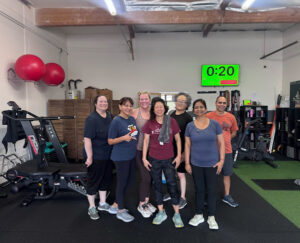
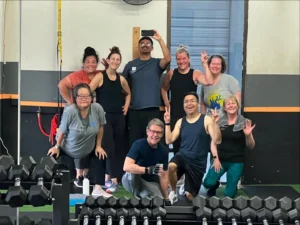
That’s why I opened Thrive.
Because so many people get “released” from rehab and then… they just stop. Not because they’re lazy. Not because they don’t care. But because they’re scared. They’re busy. They don’t want to relapse. And they don’t know what the next step is supposed to look like.
Thrive exists to be that next step.
A place where you’re not thrown into chaos. Where we don’t ignore your history. Where we rebuild strength the right way—at the right pace—with coaching, structure, and a community that has your back (literally and mentally).
And yes—this matters for your workouts. But it matters even more for your future.
Strength training is one of the best tools we have to fight osteoporosis, reduce the risk of diabetes, protect independence, and keep your brain and body sharper as you age. It helps you keep doing the things that make life feel like your life.
If you have kids. If you have grandkids. If you have people who love you…
You should want to be around long enough to feel their love—and strong enough to enjoy it.
And if you’re stuck in the rehab mindset right now, I get it.
You’re not broken. You’re not behind.
You just need the right next step—and the right people to take it with you.
— Oliver